 Fundación Fraunhofer Spain Research
Fraunhofer Center for Applied Theragnostics (CAT) strengthens International Synergies with the National Center for Advancing Translational Sciences NIH–NCATS
Fraunhofer Spain and its center continue to reinforce their role as a bridge between international and national research ecosystems by fostering strategic collaborations in different fields.
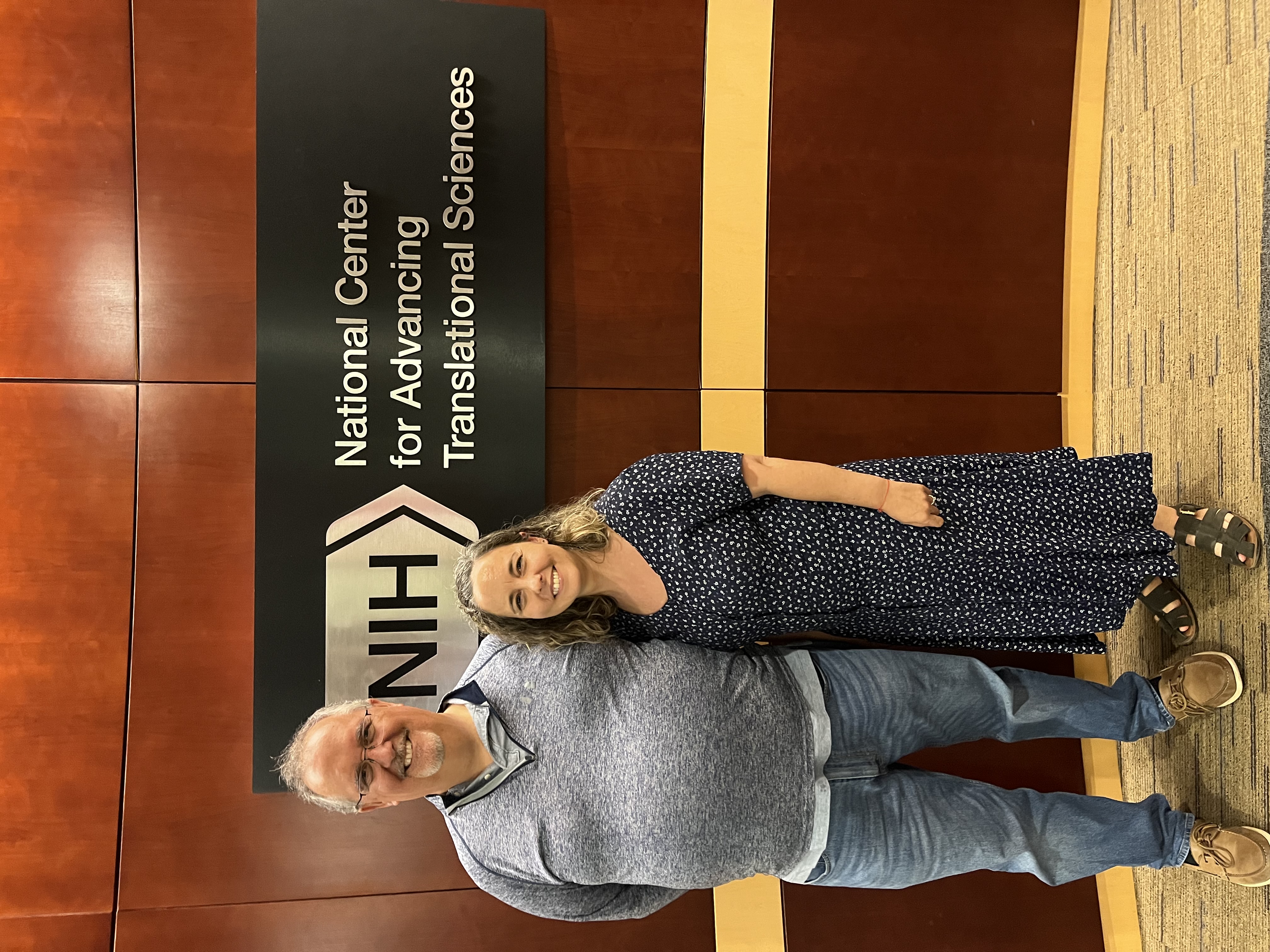
In this context, our senior researcher Dr. Maria García-Díaz, visited the 3D Tissue Bioprinting Laboratory located at NIH–NCATS (National Center for Advancing Translational Sciences), a leading institution in translational research in Washington DC. Dr. Marc Ferrer, Director of the lab, provided first-hand insight into unique infrastructures, including the drug discovery and high-throughput screening platform.
During the visit, particular attention was given to what are known as high-throughput screening technologies, which allow the testing of large numbers of compounds in a very short time. Indeed, in this platform you can find robotic arms manage every step, from cell culture to the analysis of fluorescence and toxicity, allowing the rapid and systematic evaluation of compounds. The integration of large-scale 3D tissue bioprinting and high-throughput screening technologies creates what we can describe as a “tissue factory”, where human-like tissues are produced and used for the rapid and systematic evaluation of potential therapeutic compounds. These technologies are particularly relevant for the study of muscular genetic disorders, such as dystrophies, as well as brain-related conditions, including neurodegenerative diseases.
Dr. García-Díaz explained to us that such infrastructure is extremely rare in the public sector and is typically available only in large pharmaceutical companies. “This visit was highly enriching, as it showed complementary approaches between Fraunhofer CAT and the 3D Tissue Bioprinting Laboratory. While our research focuses on generating detailed, high-content data, such as cell migration and behavior, their expertise lies in high-throughput technologies that enable the rapid screening and analysis of large numbers of samples. The combination of both approaches opens valuable opportunities for collaboration, allowing us to integrate in-depth biological insights with scalable and efficient experimental platforms.
The visit also facilitated discussions about potential future collaborations, including continued engagement and alignment with upcoming events, such as the MPS World Summit taking place in Europe next year.