About us

Fundación Fraunhofer Spain Research

The Fundación Fraunhofer Spain Research (Fraunhofer Spain) is a non-profit private Spanish Foundation, established as an affiliate of Fraunhofer-Gesellschaft, Europe’s leading organization for applied research. Its mission is to conduct independent research activities, including training, knowledge dissemination, and technology transfer. These activities range from basic research to prototype development and small-scale production, strengthening the internationalization of applied research and connecting academia with productive sectors.


A Driving Force in Innovation

Fraunhofer Spain Research has launched its first program in applied bioengineering for health: the Fraunhofer Center for Applied Theragnostics (Fraunhofer CAT). This initiative is dedicated to developing innovative diagnostic, prognostic, and therapeutic tools within the field of precision medicine. The program aims to generate significant academic, industrial, and healthcare impact, ultimately contributing to societal well-being.


Research of Practical Utility

Legally dependent on Fraunhofer Spain Research, the Fraunhofer CAT program focuses on research and knowledge transfer for the design, modeling, and optimization of diagnostic, prognostic, and therapeutic processes. Positioned as a cornerstone in bringing together research laboratories, clinicians, and the biotech industry, the center aims to ensure patients benefit directly from theragnostic approaches.

Integrated within a highly dynamic ecosystem, Fraunhofer CAT will invest in advanced interconnected diagnostic technologies and novel therapies, delivering products and services that strengthen the competitiveness of the Biotech and MedTech sectors, while enhancing the sustainability of universal public healthcare through the development and adoption of personalized therapies.

Fraunhofer Spain was founded by Fraunhofer-Gesellschaft, the largest organisation for applied research in Europe, with the economic support of  Spanish Government (Ministerio de Ciencia, Innovación y Universidades)  and Barcelona City Council (Ajuntament de Barcelona) and the first Fraunhofer CAT program with the economic support of Catalan Government  (Generalitat de Catalunya) and the academic collaboration of Barcelona University,  Institute for Bioengineering of Catalonia (IBEC) and Fraunhofer Institute for Biomedical Engineering ( Fraunhofer IBMT).

Our Executive Board

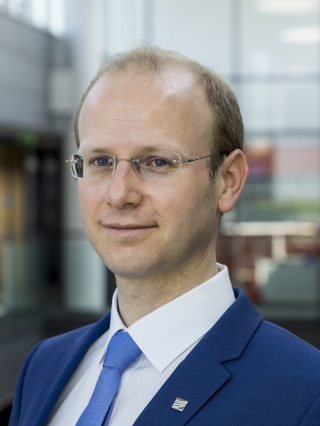
Josep Samitier

Contact Press / Media

Prof. Dr. Josep Samitier

Executive Director and Center Director

Fraunhofer Spain Research & Fraunhofer Center of Applied Theragnostics
Carrer Baldiri Reixac 4-8, Parc Científic de Barcelona
08028 Barcelona, Spain

Phone +34 934037671

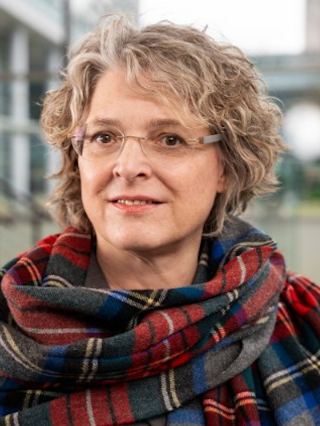
Elena Martínez

Contact Press / Media

Dr. Elena Martínez

Deputy Center Director

Fraunhofer Spain Research & Fraunhofer Center of Applied Theragnostics
Carrer Baldiri Reixac 4-8, Parc Científic de Barcelona
08028 Barcelona, Spain

Phone +34 934037671

Our current Fraunhofer Spain Board comprises

Johann Feckl

Contact Press / Media

Dr. rer. nat. Johann Feckl

President of the Board

Fraunhofer Headquarters
Hansastraße 27c
80686 München

Phone +49 89 1205-1005

Fax +49 89 1205-771005

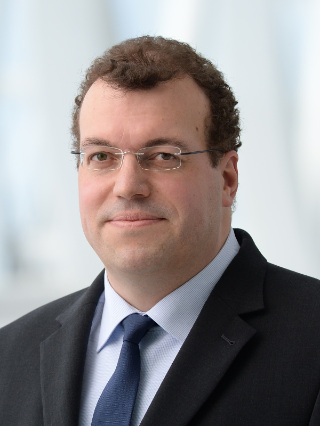
Heiko Zimmermann

Contact Press / Media

Prof. Dr. Heiko Zimmermann

Vice President of the Board

Fraunhofer Institute for Biomedical Engineering IBMT
Joseph-von-Fraunhofer-Weg 1
66280 Sulzbach, Deutschland

Phone +49 6897 9071-100

Stephanie Jung

Contact Press / Media

Stephanie Jung

Board Member

Fraunhofer Headquarters
Hansastraße 27c
80686 München

Phone +49 89 1205-4720

Fax +49 89 1205-774720

Peter Hauptmann

Contact Press / Media

Peter Hauptmann

Secretary

Fraunhofer Institute for Biomedical Engineering IBMT
Joseph-von-Fraunhofer-Weg 1
66280 Sulzbach

Phone +49 6897 9071-105

Fraunhofer-Gesellschaft

The Fraunhofer-Gesellschaft, based in Germany is the world’s leading applied research organization. Prioritizing key future-relevant technologies and commercializing its findings in business and industry, it plays a major role in the innovation process. A trailblazer and trendsetter in innovative developments and research excellence, it is helping shape our society and our future. Founded in 1949, the Fraunhofer-Gesellschaft currently operates 76 institutes and research units throughout Germany. Over 30,000 employees, predominantly scientists and engineers, work with an annual research budget of €2.9 billion. Fraunhofer generates €2.5 billion of this from contract research.

The Fraunhofer Institute for Biomedical Engineering IBMT

The Fraunhofer Institute for Biomedical Engineering IBMT acts as a device and technology developer when it comes to the solution of individual research and development projects and tasks from the areas of biomedical/medical engineering, medical (molecular and cellular) biotechnology, biohybrid technology, bioprocessing & bioanalytics, cryo(bio)technology and nano(bio)technology, ultrasound technology, biomedical microsystems, neuroprosthetics and implants, health information systems, theranostics, (mobile) laboratory technology as well as laboratory automation including in-line/on-line process control. For more than 10 years, Fraunhofer IBMT has been working in the field of stem cell research and hosting extensive cell line stocks in industrial and clinically structured biobanks for low temperature storage of valuable samples (fluids, cells, tissue fragments).

Institute for Bioengineering of Catalonia (IBEC)

The Institute for Bioengineering of Catalonia (IBEC) is a research institute and a cooperation partner of Fraunhofer Spain in Barcelona. IBEC carries out interdisciplinary research at the crossroads of engineering and life sciences, combining fields such as nanomedicine, biophysics, biotechnology, tissue engineering, and health information technology. Fraunhofer Spain and IBEC are working together, particularly in the fields of precision medicine, advanced therapies, and bioengineering. 

University of Barcelona

The University of Barcelona is a cooperation partner of Fraunhofer Spain in Barcelona. As a public university with over 60,000 students each year, it operates through an autonomous, collaborative, and decentralized governance system, offering high-quality education and research while maintaining strong engagement with society.

Parc Científic de Barcelona

The Parc Científic de Barcelona is one of Europe’s model ecosystems in research, technology transfer and innovation, covering a built-up surface area of more than 100,000 m² with some 3,442 professionals working mainly in the health sector: pharmacology, biotechnology, medical technologies, food and cosmetics. The Barcelona Science Park’s mission is to facilitate the generation and transmission of knowledge in life sciences and achieve results and impacts that contribute to improving people’s health.

Funding and Institutional Support

Ministry of Science, Innovation and Universities - Government of Spain
The Department of Research and Universities – Government of Catalonia
Ajuntament de Barcelona