 Fundación Fraunhofer Spain Research
Fraunhofer CAT Showcases its role in the Catalan Innovation Ecosystem
On 3 July, Fraunhofer Spain and the Fraunhofer Center for Applied Theragnostics (Fraunhofer CAT) took part in a round table dedicated exclusively to Fraunhofer CAT and its role within the Catalan research and innovation ecosystem. The session was held in the framework of Barcelona Innovation Coast, a city-wide project led by Barcelona City Council to foster innovation in science and technology, with more than forty active members from key sectors such as life sciences, mobility, energy, technology and digitalisation.
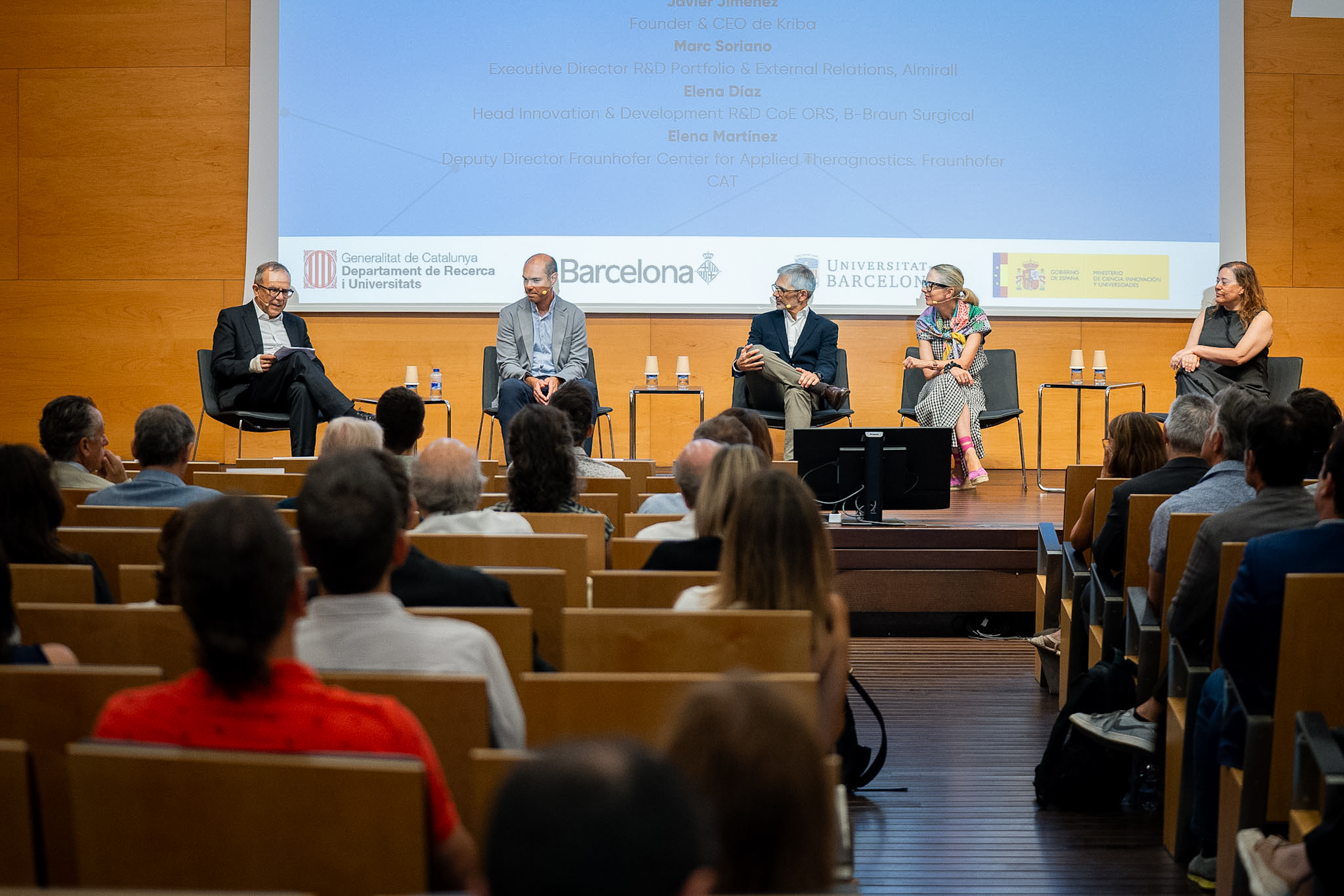
The institutional opening remarks were delivered by Jordi Valls, Deputy Mayor of Barcelona City Council, and Javier Selva, Director General for Technological Innovation and Scientific Internationalisation of the Government of Catalonia, who welcomed the participants and framed the importance of public-private collaboration, scientific talent and innovation as strategic drivers for Barcelona. The round table then focused on how Fraunhofer CAT can contribute to the ecosystem by connecting research, technological capabilities and industrial needs.
Moderated by Prof. Josep Samitier, Executive Director of Fraunhofer Spain, the round table opened with a brief introduction to Fraunhofer Spain’s mission and to the broader Fraunhofer model of applied research. He then guided the conversation towards the role Fraunhofer CAT can play in connecting academia, industry and public institutions, and in supporting Barcelona’s capacity to transform knowledge into innovation with European relevance.
From this perspective, the discussion brought together complementary views from a start-up (KRIBA), a national company such as Almirall and a multinational company like B. Braun, illustrating how Fraunhofer CAT can respond to different innovation needs within the same ecosystem. Javier Jiménez, Founder and CEO of KRIBA; Marc A. Soriano, Executive Director R&D Portfolio & External Relations at Almirall; and Dr Elena Díaz Celorio, Head Innovation and Development, R&D CoE ORS at B. Braun, each reflected on the value of Fraunhofer as a partner capable of connecting technological capabilities, applied research expertise and the wider Fraunhofer network with concrete business and research challenges.
The exchanges highlighted the importance of proximity, trust and practical understanding of companies’ needs. For KRIBA, the collaboration with Fraunhofer CAT was presented as a way to access specialized expertise and capabilities that can be particularly valuable for emerging companies. For Almirall, the discussion underlined the role of open innovation with universities, hospitals, start-ups and applied research centers, and the opportunity that Fraunhofer CAT offers to access technologies that can help advance projects. From B. Braun’s perspective, Fraunhofer was described as a bridge to additional technological resources and as a catalyst for innovation processes with the potential to accelerate technology transfer and create tangible value.
Across the different contributions, the round table pointed to a shared need: to better connect scientific knowledge with industrial application without duplicating efforts already present in the ecosystem. In this sense, Dr. Elena Martínez, Deputy Director of Fraunhofer Spain, explained Fraunhofer CAT’s differentiating role as a center with access to technologies and expertise that can complement academic innovation and respond to the needs of companies. She stressed the importance of listening to industry, understanding concrete challenges and identifying academic innovations that can be valorised and translated into real-world impact. This approach positions Fraunhofer CAT as part of the solution within the ecosystem, without duplicating existing efforts, by integrating capabilities and providing added value to partners.
The round table reinforced Fraunhofer Spain’s strategic contribution to Barcelona’s science and innovation ecosystem. By fostering dialogue between public institutions, companies, research organizations and the wider Fraunhofer network, Fraunhofer Spain continues to strengthen its role as a bridge between national and international research ecosystems.