 Fundación Fraunhofer Spain Research
Fraunhofer Spain present at Biospain 2026
Fraunhofer Spain supported BIOSPAIN 2026 as a Bronze Sponsor, reinforcing its commitment to collaboration and partnership-building within the biotechnology ecosystem. At a time when innovation and cooperation are essential to Europe’s strategic autonomy, the event provided a valuable platform to connect with organisations working in health, sustainable agri-food, and solutions to climate change.
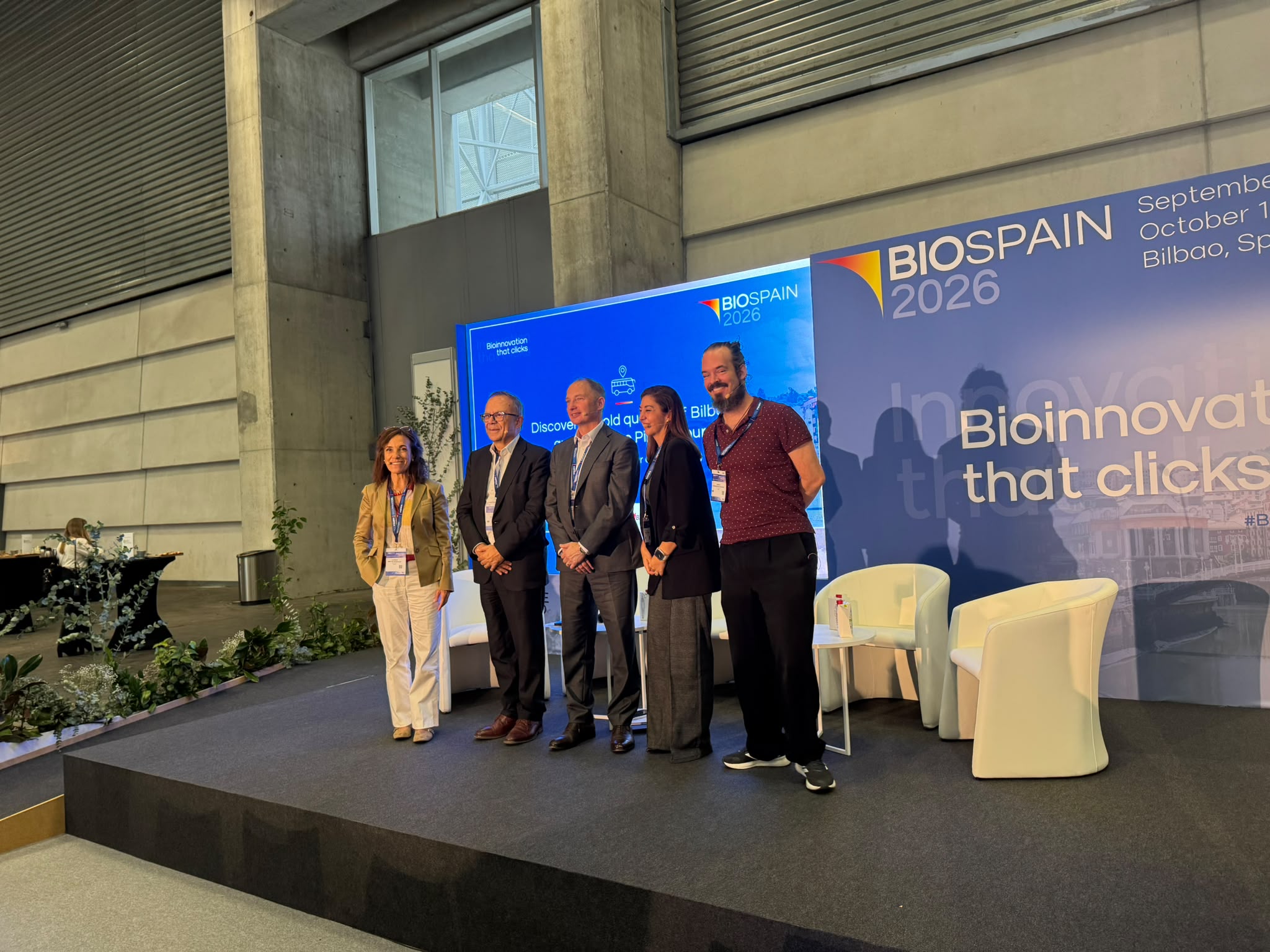
From September 29 to October 1, 2026, BIOSPAIN took place in Bilbao. Organised by the Spanish Association of Biocompanies (AseBio) in collaboration with the Basque Government, the Provincial Council of Bizkaia, and the Basque Health Cluster (BHC), the three-day congress welcomed more than 2,400 attendees and featured over 270 exhibitors. With more than 850 innovative entities represented, BIOSPAIN is one of Europe’s leading biotechnology congresses.
Our Executive Director, Prof. Dr. Josep Samitier, attended the event and participated in the panel “New Approach Methodologies: Accelerating Safer, Smarter and More Human-Relevant Innovation in Drug and Chemical Development.” Together with Carmen Martin, Natalia Sánchez Romero, John Kendrick, and Simón Perera del Rosario, he discussed how emerging technologies can improve the safety and efficiency of drug and advanced therapy development in the context of precision medicine.
During the panel, Samitier highlighted the importance and impact of technology transfer, as well as the tools that support this process. More specifically, he emphasised the use of New Approach Methodologies (NAMs) to accompany and complement animal testing in the development of current and future pharmacological products. The round table brought together experts covering all stages of organ-on-a-chip development, from hospital sampling and demographic analysis to characterisation and stringent quality control measures. In this context, Josep emphasised that the concept of “ready-to-use” organ-on-a-chip systems is crucial and must be optimised to ensure that their capabilities and properties are preserved until the models are used. One of the most challenging steps in advancing organ-on-a-chip technologies from laboratory testing to complete, ready-to-use models is integrating the different biological elements and other components that add value to them. This is where Fraunhofer Spain takes on the challenge.
Lastly, Elena Martínez Fraiz, Deputy Director, Aldo Ramírez Reyes, Project Manager, and Carles Taulé Flores, Technology Transfer And Business Developer at Fraunhofer Spain, also attended BIOSPAIN to showcase the science and technology being developed at the institute. They met with companies, consulting agencies, investors, and government agencies, among other stakeholders in the biotechnology sector, holding more than 20 fruitful meetings.